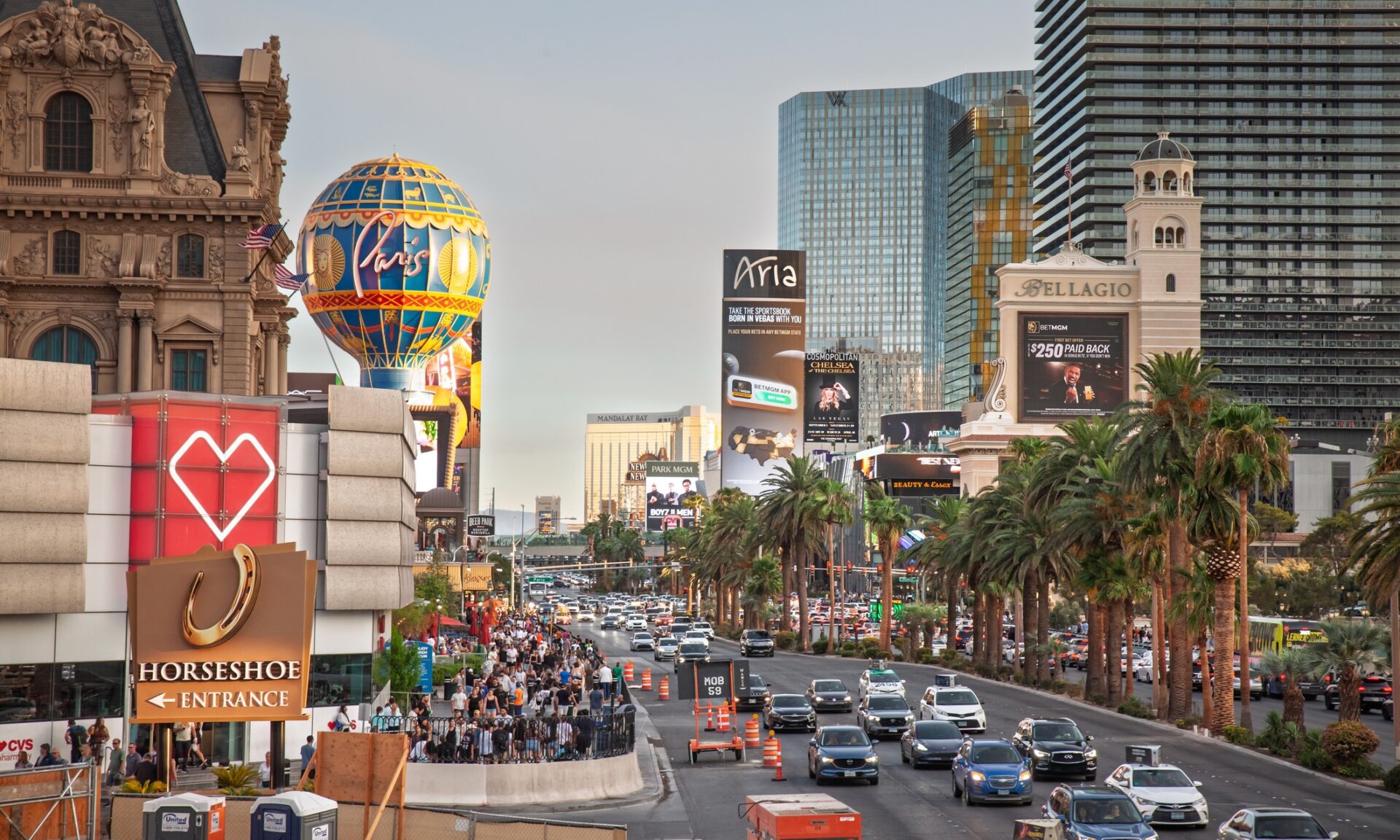
2025 was a slow year for Las Vegas tourism. Total passenger volume at Harry Reid International Airport dropped by 5.9% compared to 2024, and other metrics such as hotel occupancy and gaming revenue saw widespread year-over-year declines during the same period.
The reasons for the downturn are complex and not unique to Las Vegas, but as a long-time regular visitor, I can empathize with leisure travelers who feel Sin City is losing its allure. Costs are soaring, (especially on The Strip), and the vibes that made Vegas an iconic destination for decades are eroding. Increasingly, it feels like “What happens in Vegas” isn’t much different from what happens in theme parks and high-end shopping malls worldwide.
Here are five changes the city and its casino resorts could make to ensure it remains a part of my future travel plans.
Though resort fees are disclosed up-front, they’re typically not charged until checkout, when there’s little choice other than to pay. That’s a terrible way to end a hotel stay, and I’ve witnessed more than a few disputes over resort fees in Vegas end with guests shaking their heads in disgust.
To twist the words of Maya Angelou, “people will forget how much you charged them, but they’ll never forget how you made them feel at checkout.” Even if all-in costs were unchanged, Las Vegas could save visitors a lot of grief by eliminating resort fees in favor of fully transparent pricing.
2. Bring back free parking
Parking fees aren’t an affront to tourists like resort fees — it’s not uncommon or unreasonable to pay for parking in city centers or other tourist destinations. Still, there’s something grating about being charged yet another fee to visit a place one goes to spend and (statistically speaking) lose money. Cost isn’t the only issue: The hassle of paying for parking at each property I visit makes me less inclined to hop around The Strip when walking is impractical.
There are a few ways to escape parking fees. You can still find complimentary parking at a handful of properties on The Strip, including Circus Circus and Casino Royale, as well as shopping centers like Fashion Show Las Vegas. Many casinos also offer a few hours of free parking to Nevada residents, or waive fees entirely for visitors with qualifying elite status. And if you plan to spend your time in and immediately around your hotel, you can easily avoid paying for parking by not driving.
Nonetheless, I’d like to see more properties limit parking fees to peak hours, like weekend nights, or offer at least a few hours of free parking across the board.
3. Lean into dynamic pricing for table games
Las Vegas casinos tend to raise table game stakes during peak hours. For example, a craps table with a $15 minimum bet on weekday afternoons might get bumped up to $25 in the evening, and may spike to $50 on the weekend or during major events. While low-stakes gamblers may not like it, raising minimums when the gaming floor is most crowded makes sense.
What’s less sensible is how unwilling casinos seem to flip the script. On my own trips to Vegas, I routinely walk by idle dealers staffing tables with excessive minimums. Common sense says lowering prices will attract more customers — I for one am much more likely to play a hand for $10 than I am for $50 — but floor managers seem content to let tables remain empty in the hopes that a higher-stakes player will sit down.

Casinos don’t set stakes blithely; a lot of research and analysis goes into pricing table games (and everything else on the gaming floor) to maximize profits. But I suspect that maximization fails to account for the intoxicating vibrance gained from even a single table full of players hooting and hollering with every dice roll, wheel spin or card turn. Any profit sacrificed by lowering stakes seems worthwhile if doing so significantly improves the atmosphere.
Some properties on The Strip seem to be warming to lower stakes: for example, Excalibur recently brought back a live $5 blackjack table. That’s a good start, but if it were up to me, every casino would have at least one blackjack, craps or roulette table running around the clock with low stakes.
4. Preserve shared spaces — and make more
Some of my favorite spots on The Strip are areas open to everyone at no cost. Attractions like the Bellagio fountains and conservatory, Wynn’s Lake of Dreams, The Midway at Circus Circus, and the Flamingo wildlife habitat offer free entertainment. Other shared spaces like the Linq Promenade, Grand Canal and Le Boulevard are opportune for soaking in Vegas vibes even without a specific event. All of them lend character to the resorts they reside in and add to the experience of The Strip as a whole.
Sadly, these spaces are being encroached upon by more explicitly profitable ventures. The Mirage Volcano was dismantled to make room for the new Hard Rock Hotel. The street view of the Bellagio fountains is inaccessible for months each year due to the Las Vegas Grand Prix. Even nondescript open areas, like the west end of Horseshoe’s Grand Bazaar, are disappearing as resorts try to cram retail space into every available corner. To me, this makes The Strip feel cramped and disconnected.
Rather than trying to maximize return on every square foot, properties on The Strip should create more gathering spaces, especially ones that augment the experience for visitors. Invite street performers, install interactive art displays, bring in food trucks, plant a desert garden — build anything that stands out. It may not pad the bottom line directly, but in the long run, I think keeping The Strip vibrant and spectacular is more valuable than ensuring one can buy daiquiris and cell phone accessories on every block.
Broken escalators are so prevalent on The Strip that they’ve become a running joke among my travel companions. I can’t remember the last time I walked down The Strip and didn’t encounter a broken escalator. Sometimes it seems like more of them are broken than not.
Complaints about escalators may seem like small potatoes, but while scaling them manually is unpleasant, my concern is less with the inconvenience and more with what their perpetual state of disrepair says about how properties on The Strip manage their facilities. I don’t know what it costs to keep an escalator running reliably in 100-degree heat and under heavy use, but it seems like casinos collectively generating billions of dollars in annual revenue should be able to make it happen.