- What’s at stake: Millions of people still use checks and an abrupt exit would disproportionately harm elderly, rural and small businesses, as well as community banks.
- Expert quote: “An abrupt end to paper checks would be an unmitigated disaster.” — Rose Oswald Poels, president and CEO, Wisconsin Bankers Association
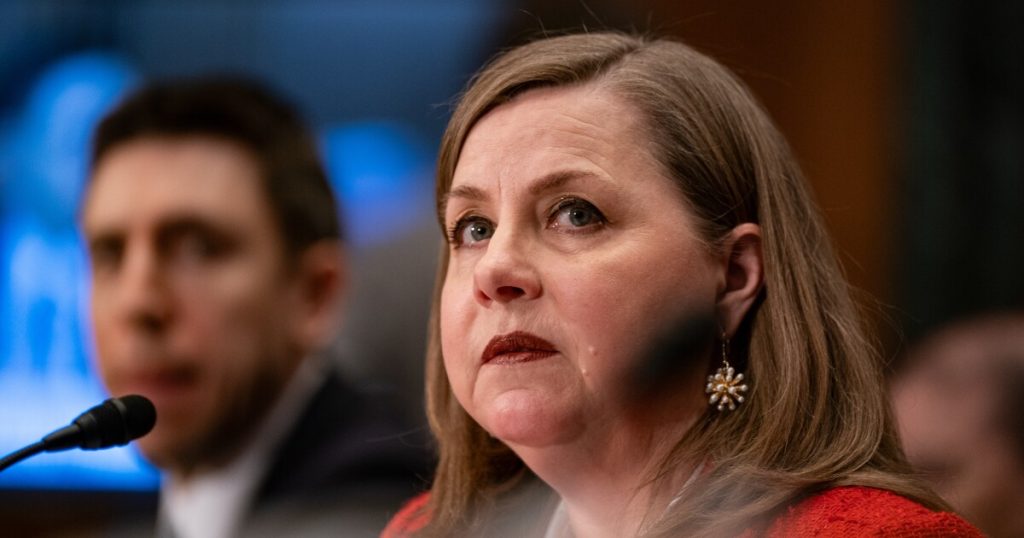
- Key insight: Federal Reserve Vice Chair for Supervision Michelle Bowman voted against the request when it was issued in December, saying the request is biased against continuing check services.
Community bankers are sounding the alarm about the Federal Reserve’s request for information about the future of check servicing, saying the agency might substantially and quickly wind down its existing system for processing checks without considering the disruption the shift would cause, particularly for older Americans, small businesses and rural areas.
Processing Content
The Trump administration, by contrast, has said it wants to cut costs rather than invest in new technology. Large banks, for their part, have called for a more orderly, managed transition to electronic payments.
The Fed’s
A main driver of the change are the fixed costs of maintaining the Fed’s legacy infrastructure on a shrinking pool of check transactions, making the fee model that supports check processing unsustainable. The Monetary Control Act of 1980 required the Fed to charge fees for check clearing services, which before then had been provided for free to member banks.
Many community bankers in comment letters filed with the Fed questioned why the central bank is even considering eliminating its check-clearing services, which some referred to as “the nuclear option.” Most community bankers said they want the Fed to do the exact opposite and invest in better check-clearing technology to combat the
Some bankers warned that the Fed could spark a crisis if it gives up its role as a neutral check processor. The Fed received 333 comment letters in response to its RFI.
“An abrupt end to paper checks would be an unmitigated disaster,” Rose Oswald Poels, president and CEO of the Wisconsin Bankers Association, said in an interview with American Banker. “Checks are still relied upon by a lot of people.”
John Ramage, chief administrative officer at $1.6 billion-asset Troy Bank and Trust, in Troy, Alabama, said his bank relies on the Fed’s check processing services to clear 3,500 checks that it receives daily, and 4,500 checks deposited daily by customers.
Rural churches, family farmers and small businesses “still depend on checks as part of their daily operations,” Ramage wrote in a comment letter. “Much of southeast Alabama remains predominantly rural, and despite our significant investments in technology and alternative payment solutions, a substantial portion of our customers continue to rely on traditional paper-based transactions.”
The Federal Reserve Banks evaluate and set tier pricing for banks every other year based on changes in the volume of checks it receives. The Reserve Banks estimate that price changes will result in
The administration has already signaled the dim view it has of checks as a medium of payment. President Trump last year signed
“Part of the concern is that the Trump administration is moving faster than business and consumers are prepared for,” said Christopher Williston, president and CEO of the Independent Bankers Association of Texas, in an interview with American Banker.
A good “first step,” Williston said, would be to hold large banks accountable for performing mandatory know-your-customer verification whenever a new account is opened.
“Fraud is top-of-mind and continues to be the bane of everybody’s existence,” said Williston. “If it’s not check fraud, it’s wire fraud, elder abuse or scams we’re dealing with on the front line. It’s really challenging.”
Community banks have
Poels said there are so many things that customers are still writing checks for — from rent payments to school field trips — that eliminating the service would be a major disruption to families and small businesses.
“There are just so many entities that still don’t have an option for a customer to pay them in a digital fashion,” Poels said. “If the Fed doesn’t stay on top of these critical investments, it will cause problems for consumers and banks alike.”
The Fed’s suggestion that market forces could resolve the issue received pushback in the RFI public comments as well, with Poels saying private-sector alternatives do not offer the same breadth of services at comparable pricing.
“The transition cannot rely solely on market forces,” Poels said.
Last year, the Fed’s board voted 6-1 to issue the request for public comment with Vice Chair for Supervision Michelle Bowman
“The check services RFI seems to favor the discontinuation of check services by Reserve Banks, even while checks remain … important payment mechanisms for consumers and businesses.”
The Fed has acknowledged that its check processing systems are near their “end-of-life” and require substantial investments to stay operational. The Fed appears to be questioning why banks would want to pour billions into a dying system, since upgrades would come from higher fees that banks would then have to pay.
The American Bankers Association and Consumer Bankers Association submitted
“Any consideration of reducing or winding down check services should be approached with reasonable transition timelines, adequate public input, and robust replacement alternatives,” wrote Stephen Kenneally, the ABA’s senior vice president of payments.