Your crypto is in my banking
The beams are crossing, the multiverses are converging, your peanut butter is in my chocolate. The crypto industry is inside the walls, and Wall Street is going inside crypto. This has, of course, been happening for some time now, but if you ever doubted the degree to which it’s been happening two recent developments make it crystal clear.
Processing Content
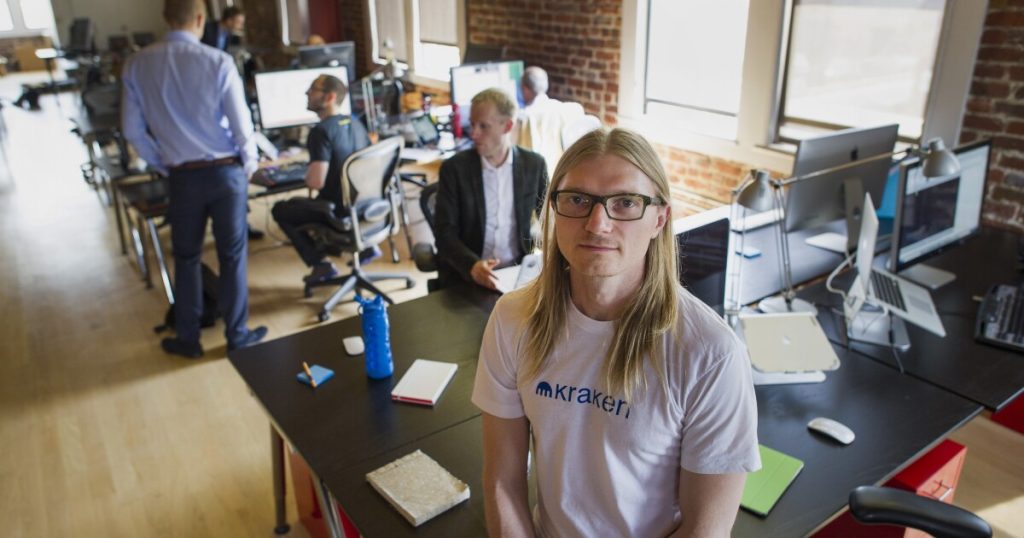
First there was the news that the crypto exchange
You might be wondering, why Kraken? There were in fact a lot of questions being asked. Why Kraken, and not Custodia, which is at least an actual bank? Why did the KC Fed front-run the
The second thing that caught my eye was
Kraken got access to the Fed and Morgan Stanley applied to open a crypto bank. I don’t think there’s any question but that tradfi and defi are now swimming in the same pool. Whether that’s a good thing or not is a big question. But it is clear that the proverbial Overton window has shifted for crypto, and everybody is jumping through.
Prediction markets
Prediction markets are
Look, I am biased against gambling. I just don’t like it. I’ve lived my entire life in New Jersey, and have been to Atlantic City exactly once, for an afternoon. I lost $40. I’ll probably never go back. So I’m not the most objective person on this topic. And I do think prediction markets are gambling. And I do think prediction markets are bad for society. And things like making bets on when a war would start or when a foreign leader will get killed is a pretty prime example of why. What possible benefit does that serve society? And it gets worse when you consider that it’s possible – possible – that people with advance knowledge of those events were making those bets. That is what’s got the regulators and lawmakers standing up at attention.
I will, though, acknowledge that some people do actually think there is a socially beneficial use to prediction markets, and it’s not just the CEOs of Polymarket and Kalshi. Some researchers at the Fed crunched the numbers, and say that prediction markets are just as good, or sometimes even better, at predicting things like GDP reports, inflation numbers and other economic indicators. And these markets are operating continuously, providing a live feed on the wisdom of the crowd.
Spanish fly in the ointment
And you thought
Imagine this: you are a giant bank in Spain. You operate in the U.S. but you want to get bigger. So you strike a deal and buy a sizable U.S. regional bank. It’s the biggest deal in the U.S. in several years. A savvy business deal, right? Then the bombs start dropping in Iran, the Spanish denies the U.S. military use of their air space and the prime minister of Spain calls the war illegal, and the U.S. president says he’s going to cut all trade with Spain.
Banco Santander’s
Buying Webster would make Santander one of the biggest regional banks in the U.S., with almost $330 billion in assets, larger than M&T and Fifth Third. It doesn’t take a lot to imagine this administration suddenly declaring it doesn’t want a foreign bank to be that big here in the land of Coca-Cola, and blocking it.